Your Sketchbook Isn't for Finished Paintings
On pressure, permission, and what happens when you treat your sketchbook as a laboratory instead of a stage.
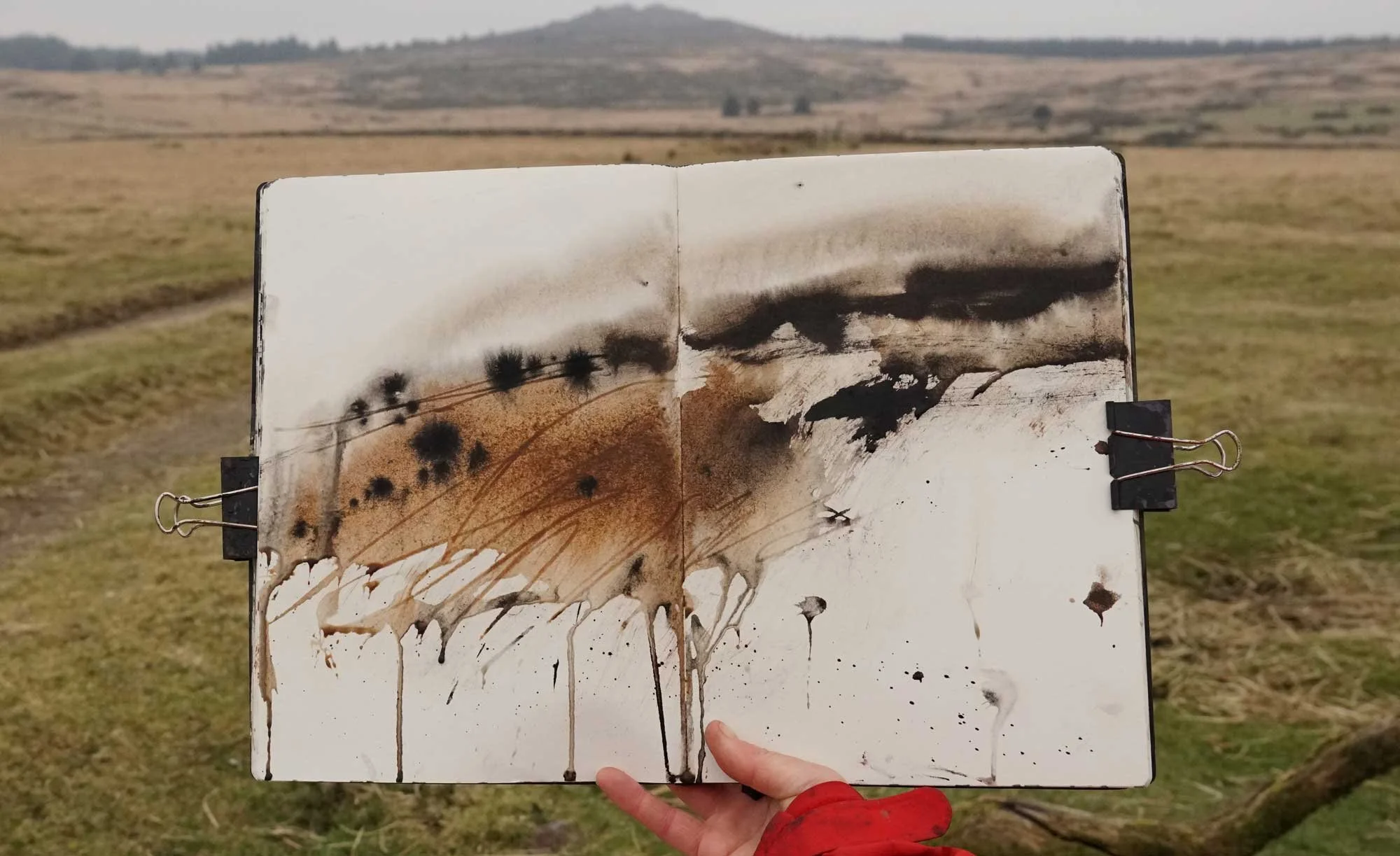
“This week in Wild at Art — my online artist’s membership — a member raised something that quietly stopped the room. She had a block. Every time she worked in her sketchbook, she found herself trying to make finished paintings. When I opened it up to the group, the response was almost universal. Most of them felt exactly the same.”
It's one of those things that sounds so simple when you say it out loud — and yet it runs so deep. The sketchbook block. The frozen page. The feeling that every mark you make needs to justify itself, look presentable, be worth showing.
I want to talk about this properly — because I think it's one of the most common and quietly damaging blocks I see in early landscape artists. And once you understand what's really happening, something can shift.
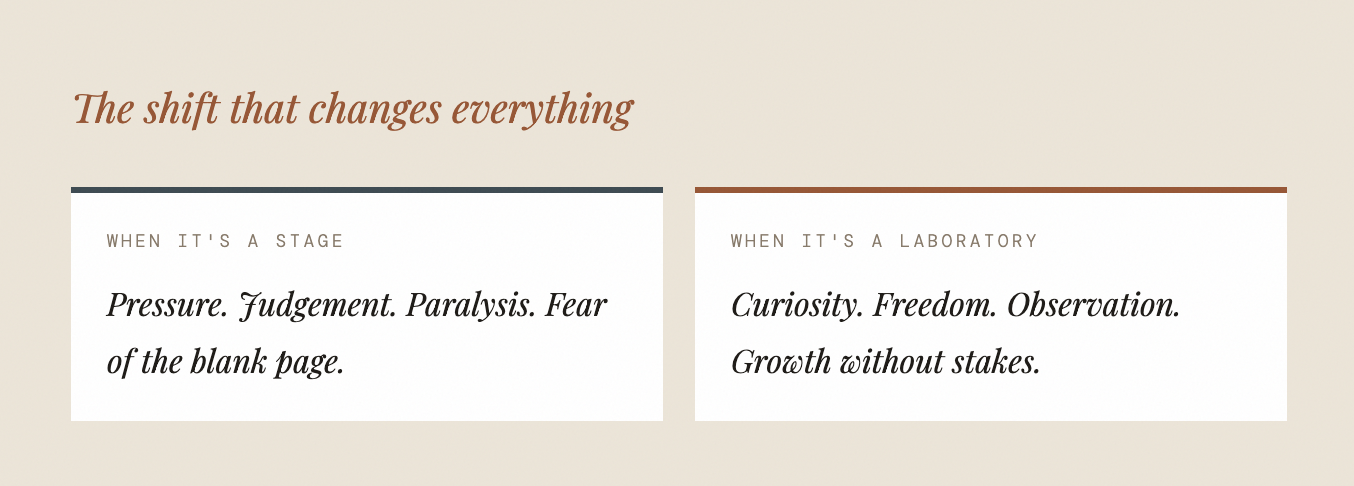
When the sketchbook becomes a stage
Here's what happens. You head out — sketchbook in bag, colours packed, the landscape all there in front of you. And somewhere between picking up your brush and touching the page, something starts to build. Thoughts like, “Am I going to create something great today?'“
The sketchbook stops being a place to explore. It starts feeling like a performance.
Suddenly the blank page isn't an invitation — it's a test. And the question you're unconsciously asking yourself isn't what do I notice? or what am I curious about? It's: will this be good enough?
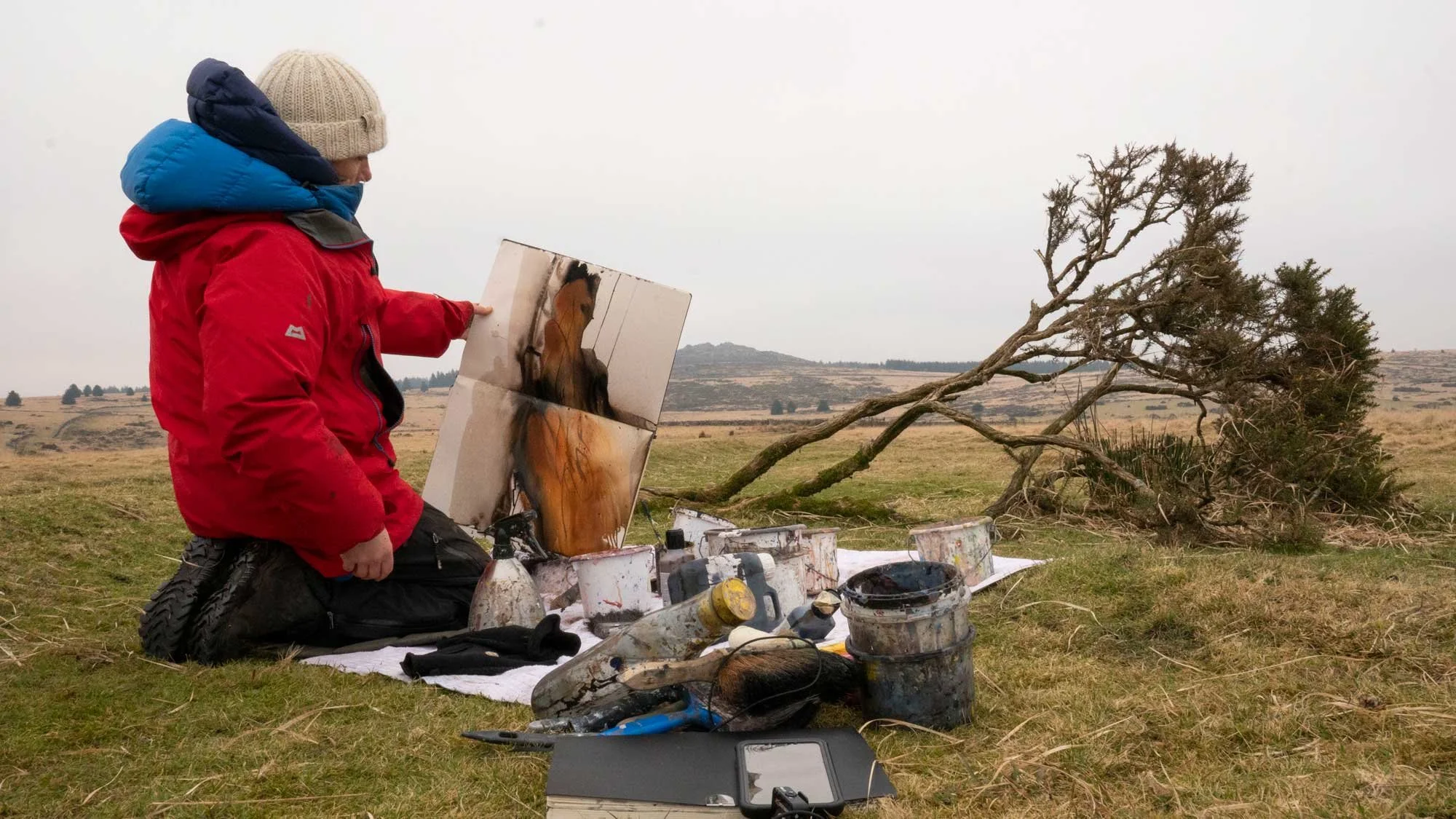
“The three quiet pressures:
- Pressure to get it right
- Pressure to make it look good
- Pressure not to “waste” the page”
That third one is particularly interesting — the idea of wasting a page. As if the page were precious. As if paper were not, in fact, one of the cheapest and most renewable resources in your entire practice.
But what we're really afraid of wasting isn't the paper. It's our time. Our effort. Our sense of ourselves as an artist. We want to create something we can stand behind, something that reflects well on us. And that very desire — completely understandable, completely normal is what shuts exploration down entirely.
Because you cannot explore and perform at the same time. They require opposite states of mind.
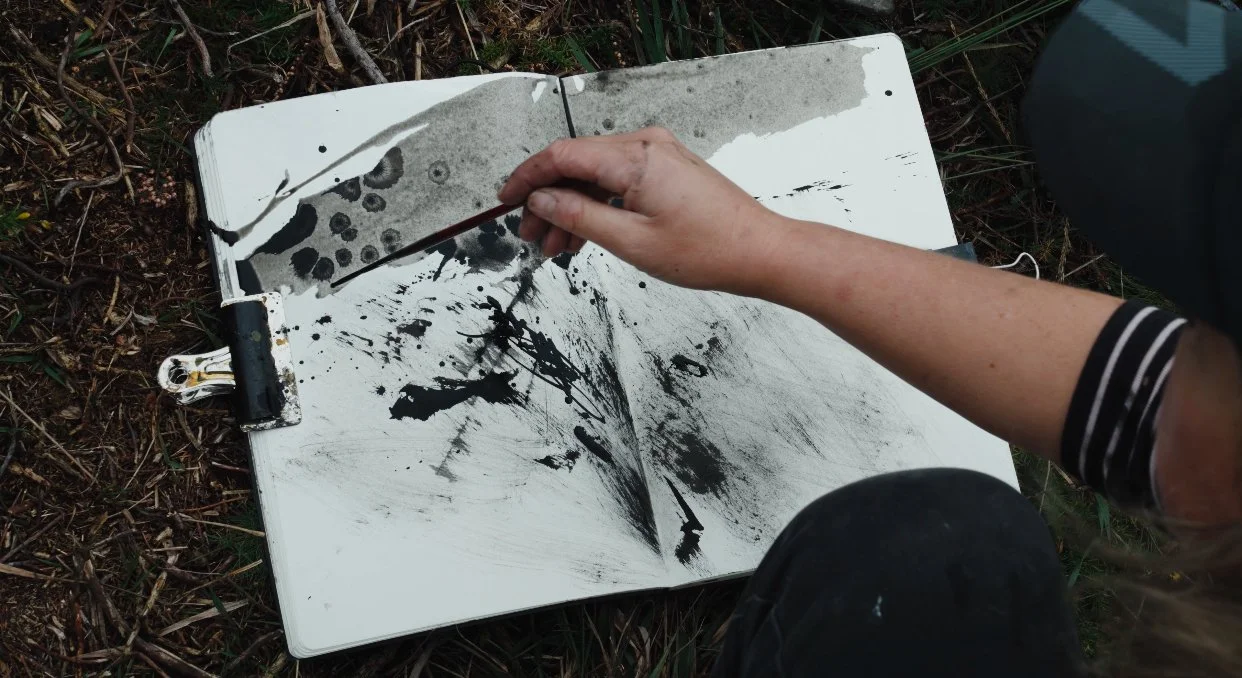
Playing with Ink in a Sketchbook on location
“When the sketchbook stops being a place where you need to prove something, it becomes a place where you can discover things. And that shift can completely transform your time in the landscape.”
The sketchbook as field laboratory
Think of a scientist's field notebook. It is not beautiful. It is not meant to hang on a wall. It is filled with false starts, crossed-out hypotheses, rough diagrams, excited margin notes, and more failed experiments than successful ones. And it is, for exactly those reasons, invaluable.
Same with authors, poets, musicians, actors. They have to practice, scribble, explore, get it wrong.
Your sketchbook is the same. It is your field laboratory. Your research document. The place where you test the idea before you commit to the canvas.
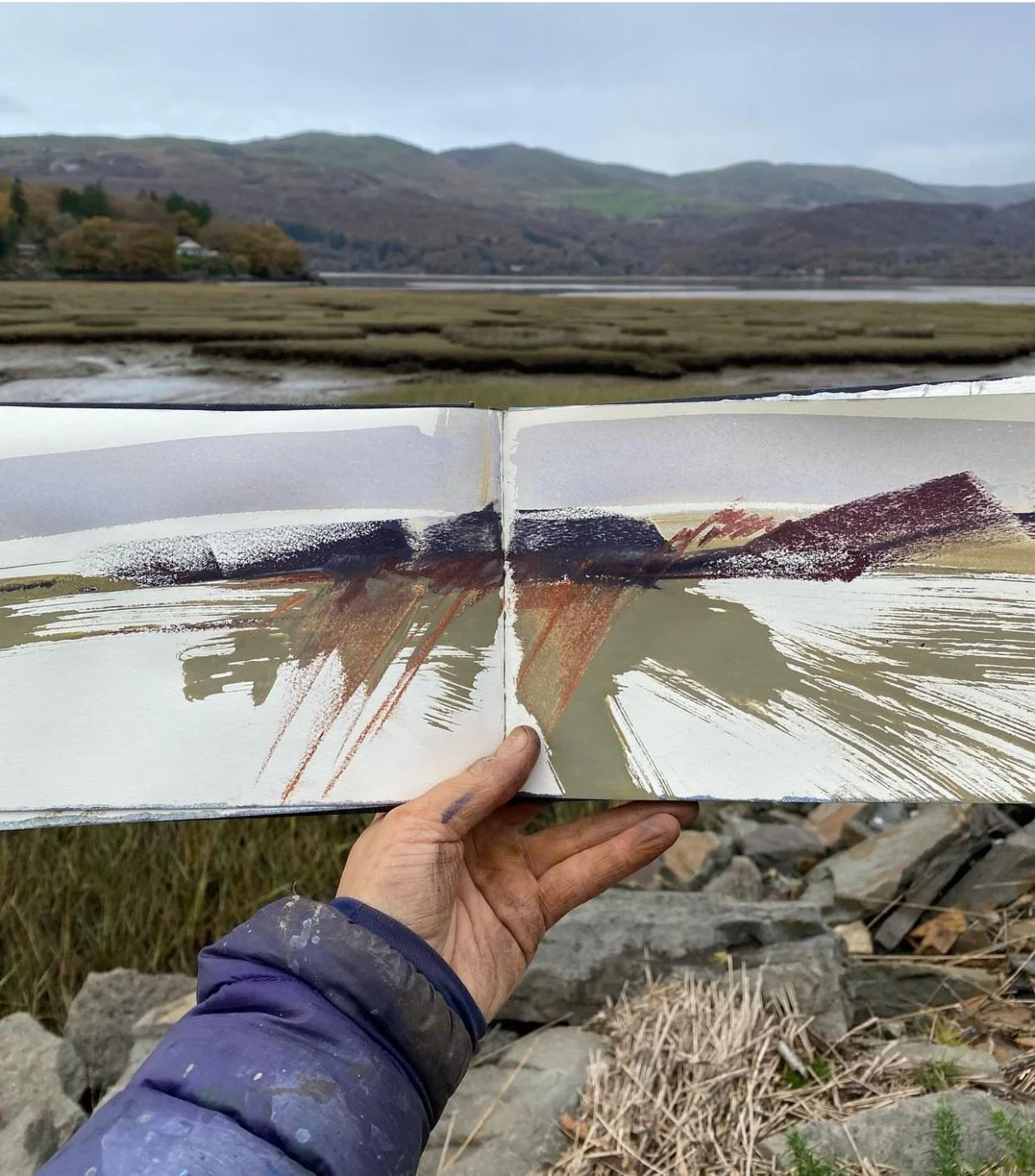
Sketchbook study on location in Wales
WHAT A SKETCHBOOK IS ACTUALLY FOR
Studies, not statements
Testing composition ideas quickly
Experimenting with colour relationships
Exploring mark-making and texture
Studying light and atmosphere
Practising the act of seeing
Trying new tools without risk
Pages can be messy, unfinished, layered with notes, or half-painted over. They can stick together, fall apart, be full of scribbles. A page can take two minutes or fifteen. None of that matters. What matters is that the looking happened — that the eye was trained, the hand moved, the observation was made.
One of my own habits: I often pull pages out of sketchbooks entirely, or scan and print them to pin on my studio wall. They become reference points. Visual thinking made physical. The mess of the field becomes the resource of the studio.
On one visit to my local beach, I filled at least ten pages in a single session. Around 70% were a complete mess. But a handful — four or five pages — contained something real. A colour ratio I hadn't tried before. A compositional idea that surprised me. A moment of light captured in three marks. Those gems were only possible because I wasn't precious about the mess.
The power of multiple studies
Here's a way to think about what becomes possible when you let go of the finished-painting expectation. Imagine going out for a single hour with your sketchbook and producing:
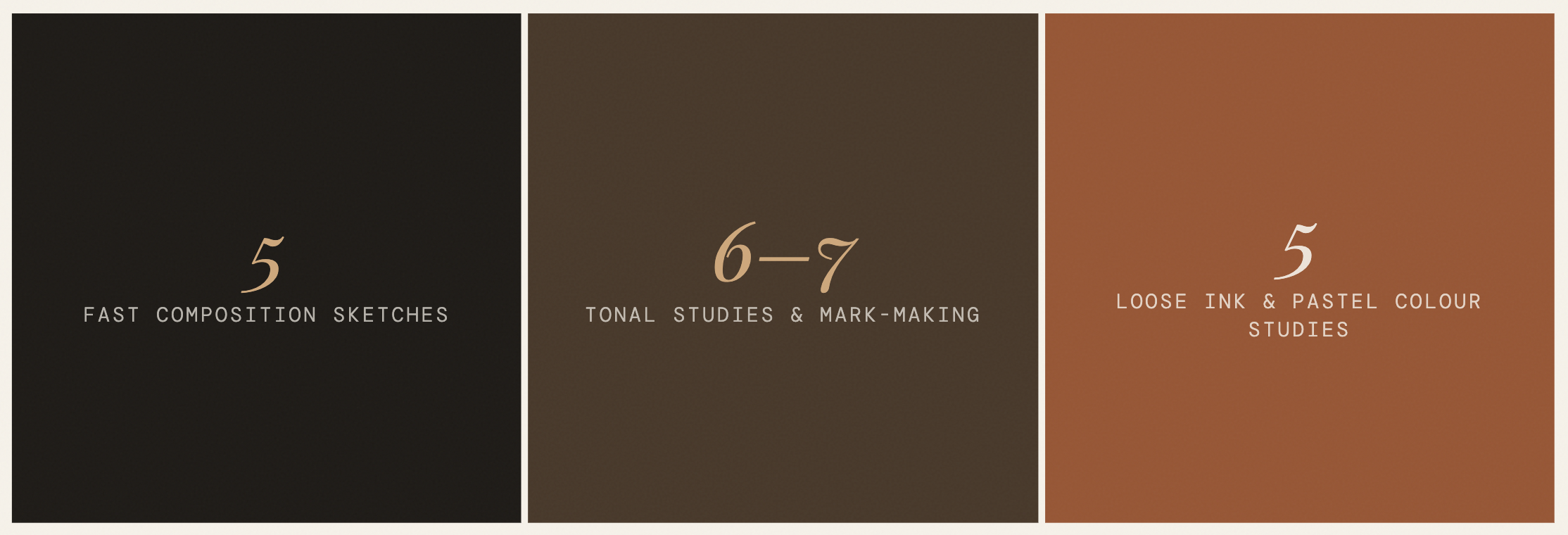
That's over fifteen pieces of visual research — each one training your eye to notice something slightly different. Fifteen observations. Fifteen small learnings. Fifteen moments where you were looking, really looking, at the world in front of you.
And here's the crucial thing: when you return to the studio later to work on a more considered, finished painting, you are no longer guessing. You are working from experience. From observation. You have a wealth of visual information to draw from — light ratios, colour relationships, compositional energy — because you spent that hour in the field actually studying, not performing.
The sketchbook pages become the invisible architecture beneath the finished work. Nobody sees them. But they are holding everything up.
Permission to be in process
So next time you head out with your sketchbook, carry this with you as clearly as you carry your brushes:
You are not there to create finished paintings. You are there to study the landscape. To be with it. To notice it.
Play with your brush marks. Try a dramatic composition you'd normally talk yourself out of. Do something radical and brave. Focus in tight on a single detail, then open your view wide. Sketch fast. Sketch slow. Layer. Splash. Scribble and scrape. Mix colours you'd never try on a "real" canvas.
There are no rules in the laboratory. Only curiosity, and the willingness to see what happens.
These studies — these loose, imperfect, unpretty pages — are what quietly build the foundation for your best paintings. They are not the work before the work. They are the work.
I hope this gives you permission to open that sketchbook without the weight of expectation. Go and make some beautiful, glorious mess.
Happy sketchbooking,
Love Sam x