The Earth Colours
On the quiet power of Sienna and Umber — the colours that don't shout, but make everything else sing.

“Sienna and umber are timeless, earthy pigments—born of iron and manganese oxides—that capture the raw beauty of the natural world. They offer a grounded elegance, from the rustic charm of Tuscan clay to the rich, stabilizing depths of deep shadows.”
This week I received a lovely email from a lady who was struggling with the Siennas and the Umbers. She knew they were powerful. She'd seen what they could do in other artists' work — that warmth, that depth, that sense of everything being held together. But every time she reached for them herself, she felt uncertain. So she wrote.
It's a question I suspect many of us have had but never quite voiced. So I want to answer it properly — not just as a quick tip, but as an invitation to really understand these colours. Because once you do, they'll never feel uncertain again.
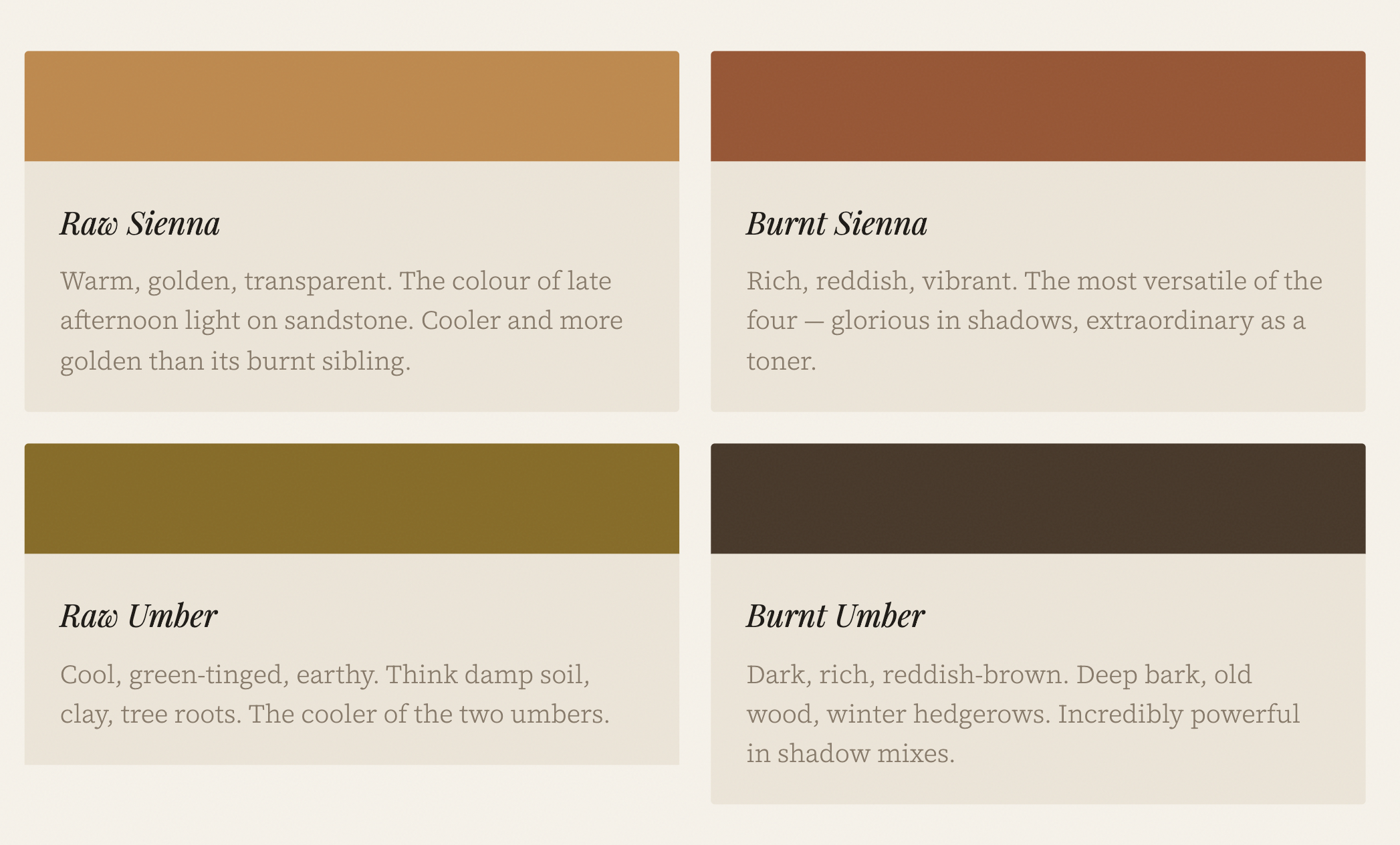
Landscapes turned into paint
Start with the names. They're not accidental.
Sienna takes its name from the city of Siena in Tuscany — that place of terracotta rooftops, dusty piazzas, and hillsides baked by the Italian sun. The iron-rich clay dug from those hills was ground into pigment and used by Renaissance painters for centuries. When you squeeze raw sienna onto your palette, you are, in the most literal sense, holding a piece of the Italian landscape.
Umber comes from Umbria — the green heart of Italy, a region of dense forests, ancient stone towns, and deep river valleys. Its pigment, coloured by both iron and manganese oxides, carries something older and heavier than sienna. More shadowed. More grounded.
Even before you mix them, just say the names aloud. Burnt Sienna. Raw Umber. There is something almost geological about them — as if language itself is trying to return you to the earth.
And here's what I love most: if you step outside and look at the world around you right now — the soil, the tree bark, the dried grasses, the mossy stone, the autumn bracken — you will find these colours everywhere. They were never exotic. They are simply the colour of the ground we walk on.
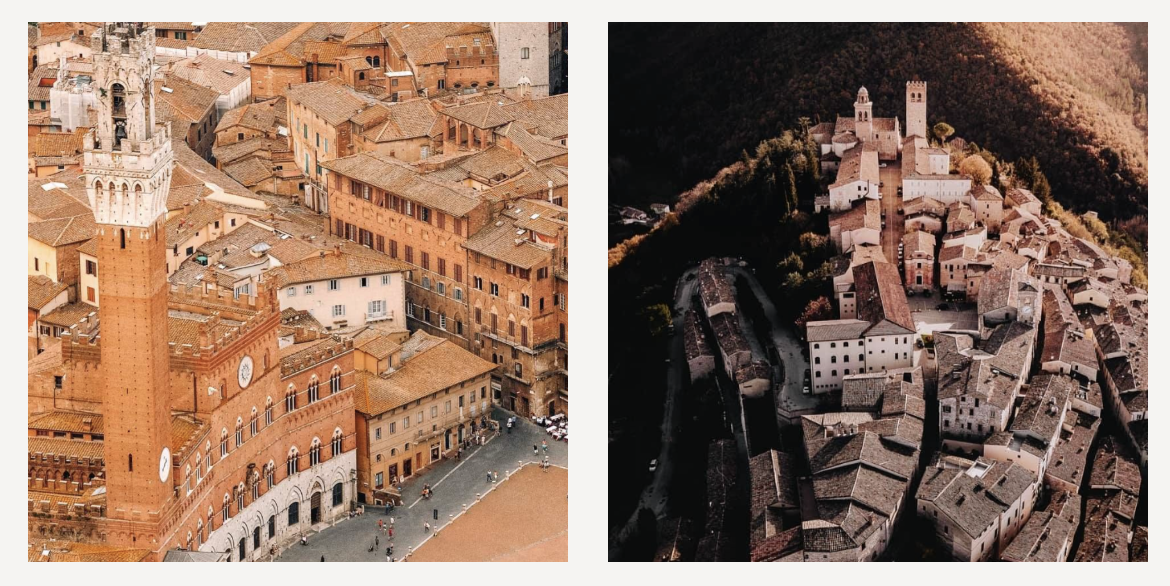
Landscapes of Italy
“They aren’t the big stars. They don’t shout. They aren’t sexy like the cadmiums or thrilling like the ceruleans. But they are the colours that make every other colour more believable.”
What they do to other colours
Pure primaries are extraordinary — but they can feel almost violent in the context of landscape. A cadmium red straight from the tube. A phthalo blue at full strength. They vibrate with an intensity that feels wonderful in the abstract, but detached from the nuanced, impure world we actually inhabit.
This is where the earth colours perform something close to alchemy. Add just a whisper of burnt sienna or raw umber to a primary, and watch what happens. The colour doesn't die — it settles. It becomes more like memory than sensation. More like something seen than imagined.
Burnt Sienna + Ultramarine Blue
— creates a stormy, shifting grey that feels like incoming weather. The two colours neutralise each other into something that breathes.
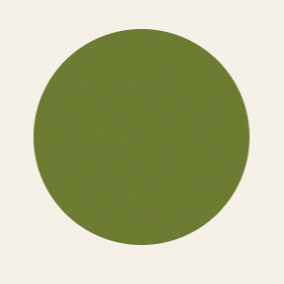
Yellow + Raw Umber
- turns into the olive greens of moss, lichen, and distant fields seen through haze. Nothing bought from a tube can touch this.
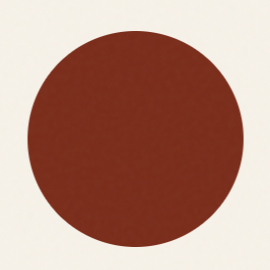
Red + Burnt Umber
— becomes the rich maroon of autumn leaves, old brick, deep shadow on warm stone.
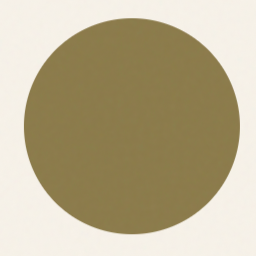
Any colour + a small touch of earth pigment
— subtly links the whole palette. They begin to feel like they come from the same place, the same light, the same world.
The secret of colour harmony
Here is perhaps the most underrated gift these colours offer: harmony.
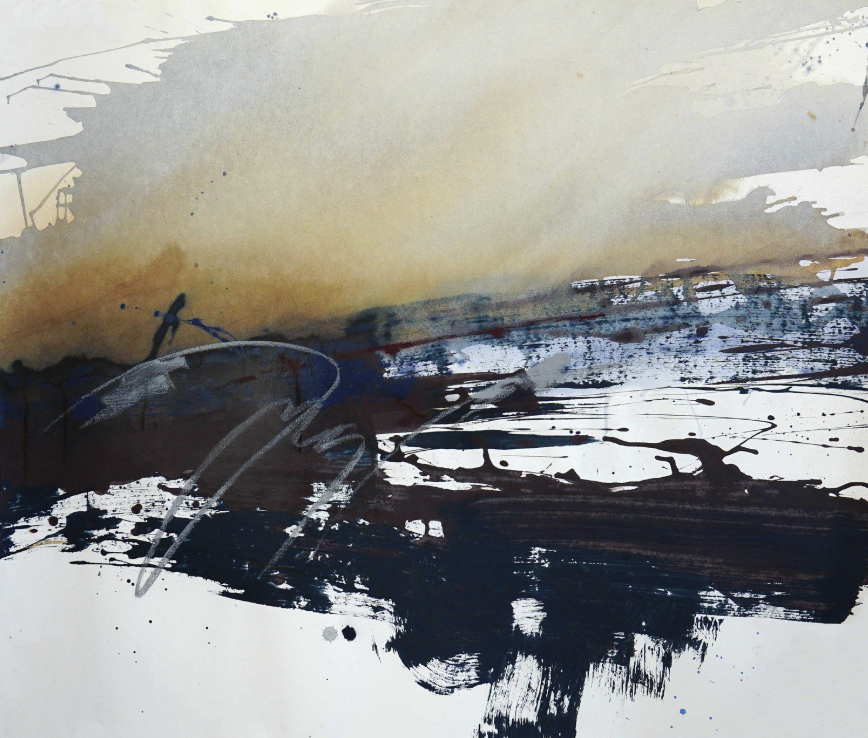
Sunset Over Cadair Idris
In my painting Sunset over Cadair Idris, I used burnt sienna ink mixed with ultramarine (and just a breath of black) to create both the dramatic grey of the sky and the warm brown of the suggested landscape below. Two very different passages of the painting — but built from the same root colours. The result is that the sky and land don't just coexist on the paper; they belong to each other.
This is what earth colours do quietly, consistently, across every painting they touch. Because they are naturally muted and non-primary, adding even a small amount to different mixes creates a subtle thread that runs through the entire piece. The colours begin to relate. To resonate. To speak the same language.
It's the difference between a painting that is technically correct and one that feels true.
One quick way of remembering the difference between the colours is:
A 'RAW' APPLE IS GREEN = RAW SIENNA / RAW UMBER is greener (cooler)
A 'BURNT' APPLE WOULD BE RED = BURNT SIENNA / BURNT UMBER is redder (warmer)
Out of the two, umber is cooler.
So if you want to make a cooler green, add RAW UMBER to yellow. If you want a richer, warmer ochre green add BURNT SIENNA instead.
A Simple Exercise:
A Day of Earth Colour Mixing
Set out your four earth colours alongside your three primaries.
One by one, add a tiny amount of each earth colour to each primary — a little at a time, watching how it shifts.
Try them with black too. Burnt umber and black is extraordinary.
Make a small reference chart of your results — your own personal colour map.
Then take one combination you love and use it in a small landscape study.
Works in watercolour, ink, acrylic — any medium you use. The relationships between these colours remain the same regardless of how they're carried.
Perhaps that is the real magic of sienna and umber. They are not the loudest voice in the room. They don't demand attention or dazzle the eye at first glance. But they are the colours that make a painting breathe — that make the blues feel deeper, the greens more alive, the whole thing more like the world it came from.
They are the quiet ones who hold everything together. And once you've felt what they can do, you'll reach for them instinctively — not as an afterthought, but as a beginning.
I hope this gives you a little more clarity — and maybe a quiet excitement to get your palette out and start exploring. If you do try the mixing exercise, I'd love to hear how it goes.
Sam x