Part 2 - From Realism to Abstraction
Why over-attachment to detail is one of the most common — and most solvable — blocks in expressive landscape painting. And a practical exercise to start loosening your grip today!
This is part two of my six-part series on abstraction. In Part One we explored the fear of letting go of recognisable forms — the deep discomfort of stepping off the mapped path and into suggestion. In this episode we're going a level deeper. Because even when you know you want to be looser, freer, more expressive — there's something that keeps pulling you back. And for so many artists, that something is detail.
I want to start with a question. You may have heard yourself say one of these things — or felt them, even if you never said them out loud:
Do any of these sound familiar?
As soon as I try to make a "proper" painting, I tighten up.
Detail creeps in again and again. I want to work intuitively, but I keep trying to show everything like it is.
I can be loose in my sketchbook — but the moment it matters, I freeze.
I don't know how to simplify. I don't know what to leave out.
If you recognise yourself in any of those, I want you to know: this is one of the most common struggles I see across all levels of artist. From complete beginners to people who have been painting for decades. The pull toward detail, toward accuracy, toward getting it right — it is almost universal.
And it makes complete sense when you understand where it comes from.
Where the obsession with detail begins
Think back. Right back to being very small, with a colouring book or a sketchpad. What was praised? Staying inside the lines. Not making a mess. Getting it neat. That looks just like a real dog!
Then as you got older, the praise shifted form but kept its shape: accuracy was valued, recognisability was rewarded, and anything that looked too different, too loose, too hard to understand was met with a slightly uncertain silence.
Our entire visual education — for most of us — has been a long training in correctness. And that training doesn't just sit in your mind. It sits in your body. In the grip of your hand. In the small, tight, careful movements that take over the moment something feels like it counts.
But here's what abstraction asks of you. It asks you to completely overturn that value system.
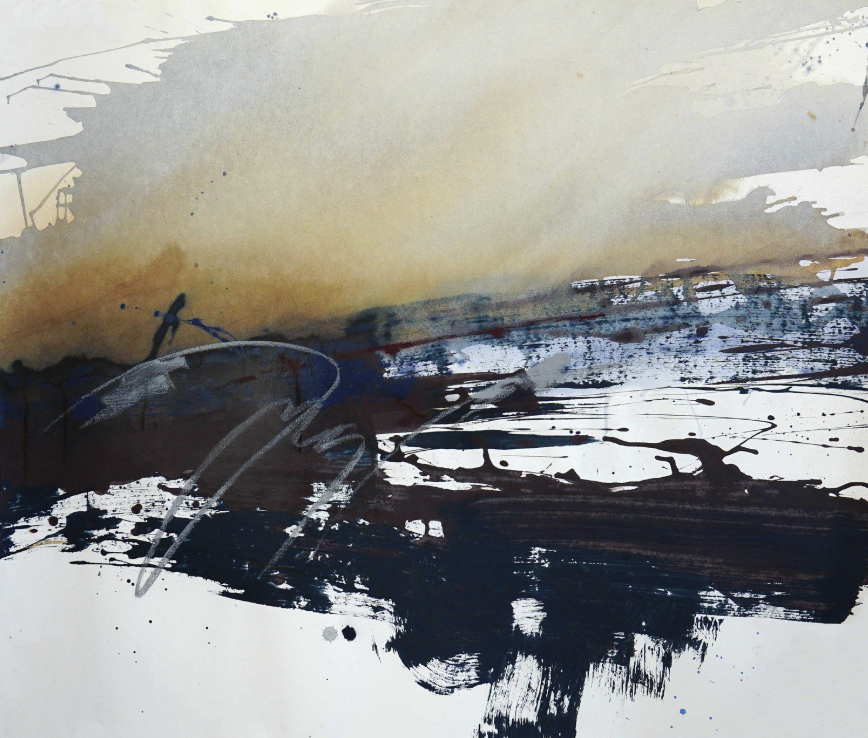
Sunset Over Cadair Idris
The fundamental shift
Abstraction doesn't care for accuracy. It cares for essence.
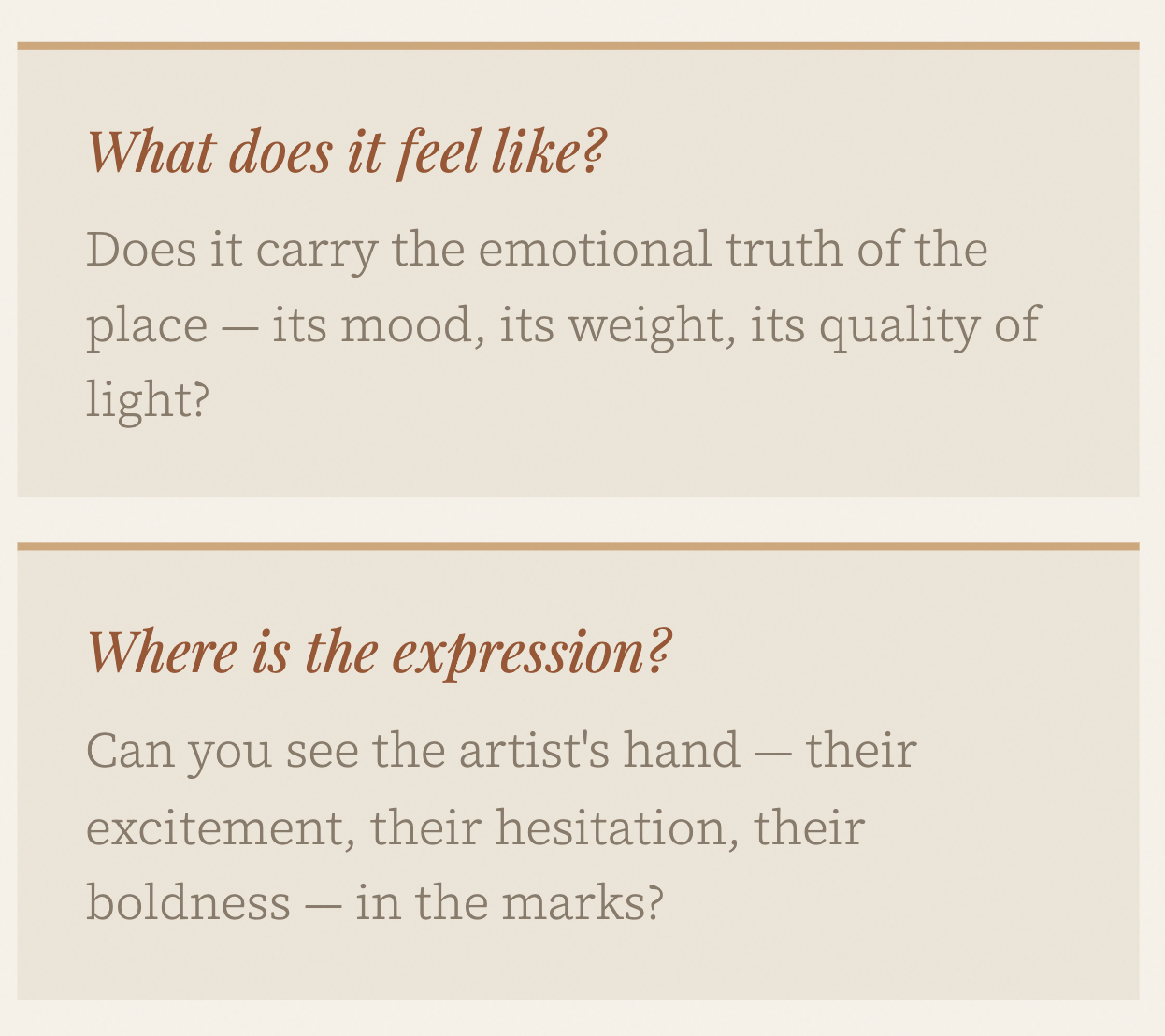
Your painting doesn't need to prove your skill. It needs to show your feelings. It doesn't need perfection. It needs presence — and a little boldness.
Why letting go feels so dangerous
I want to be honest about this, because I think it's important: letting go of detail doesn't just feel lazy or careless. For many artists it feels like letting go of the very things that prove their worth.
Skill. Effort. Mastery. Perfectionism. The evidence that you looked carefully, that you worked hard, that you took it seriously. Detail, for many of us, has become the currency of credibility. And loosening it feels like spending down savings you worked your whole life to build. I hear this so many times in my in-person workshops.
So we hold on. We tighten. We tell ourselves we'll loosen up after we get the foundations right. And the result? A painting that is technically competent and somehow completely lifeless. Correct — but not alive. Accurate — but not true.
That precision, applied without restraint, chokes the life out of a painting. And deep down you already know when it's happening. This is why i’m writing this blog! because I haer it so much.
"Loosening up is physical, not just mental. My body has to unlearn perfection too."— A Wild at Art member
That observation is one of the most important things I've heard from my community. And it points toward something most artistic advice completely ignores: the problem isn't only in your head. It's in your posture. Your grip. Your breathing. The way you hold yourself at the easel as if being examined.
The most important reframe
A painting that feels alive is worth more than a painting that looks correct.
The goal is not accuracy. The goal is presence. To be so fully in the moment of making that the marks carry that aliveness into the work — and from the work, into the viewer.
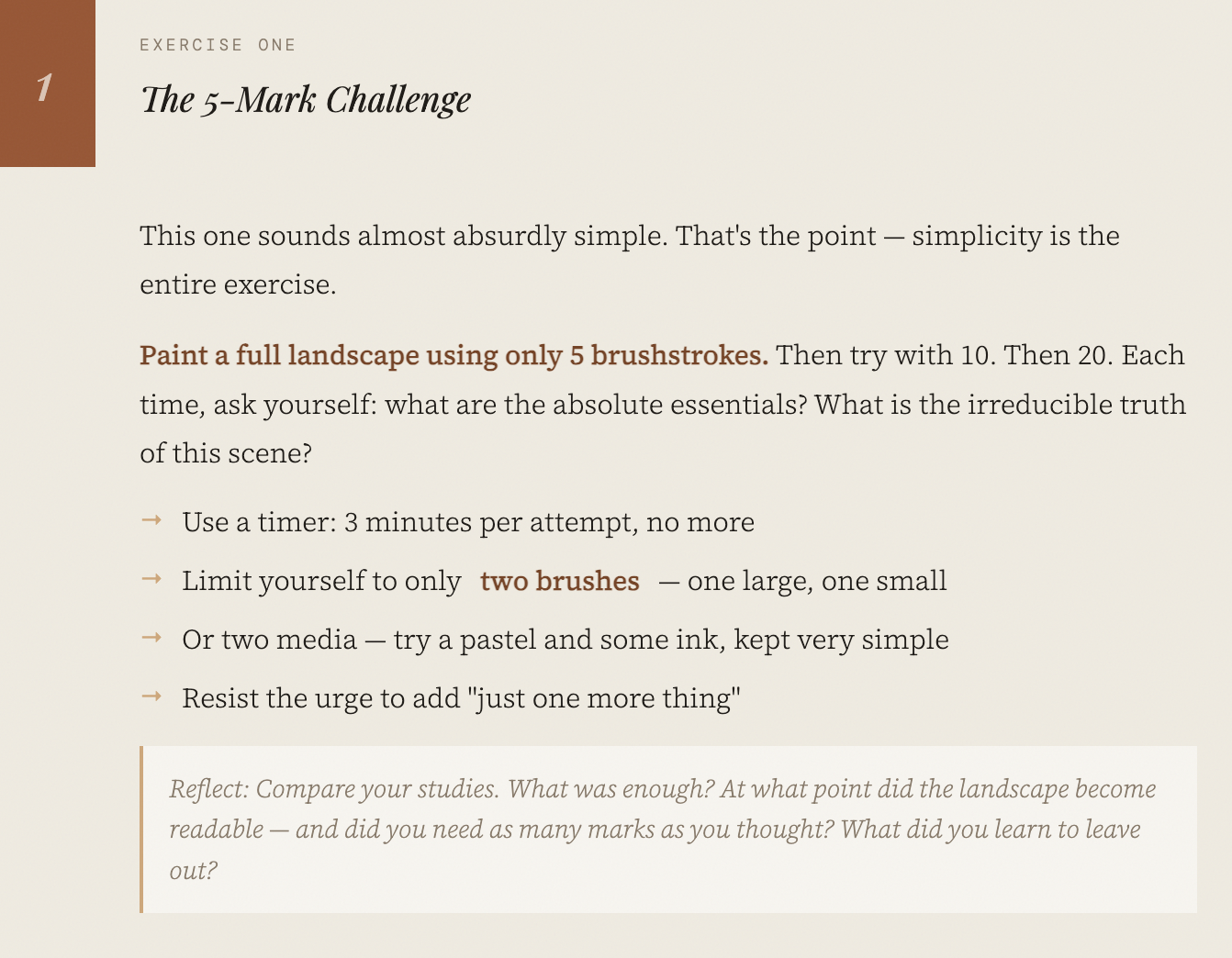
An exercise to start loosening your grip
This isn’t just a creative prompts. It’s designed to interrupt the specific habits — mental and physical — that keep detail creeping back in. Notice what happens in your body, not just on the page.
The real invitation
Feel the excitement of a splash of jet black ink. The wildness of unexpected colour. The aliveness that runs through your arm when you drag a huge brush across the surface. That is not sloppiness. That is painting with your whole self — and it is exactly what the landscape deserves.
Over time — and with practice, and with patience — you will find that the grip loosens. Not because detail stops mattering, but because you start to understand when to use it and when to resist it. Detail, in the right place, at the right moment, can be devastating in the best possible way. But used everywhere, it becomes noise. It cancels itself out.
The goal is not to never be precise again. It's to make precision a conscious choice rather than a reflex. To reach for detail when it serves the painting — and to hold back, breathe, and stay loose when it doesn't.
Coming next in this series
Episode 3 — Becoming more confident with composition in abstract painting
I hope these exercises give you something genuinely useful to take into the studio this week. Start with the 5-mark challenge — it's humbling and liberating in equal measure. Then let your body into the room. Let it help.
The detail will always be there if you want it. The question is whether you're choosing it — or whether it's choosing you.
Love Sam x