Part 5 - Overwhelm When Heading Outdoors
The Landscape Is Too Big to Copy!
Why working outdoors feels overwhelming — and how to move from trying to capture everything to suggesting the vital few things that truly matter.
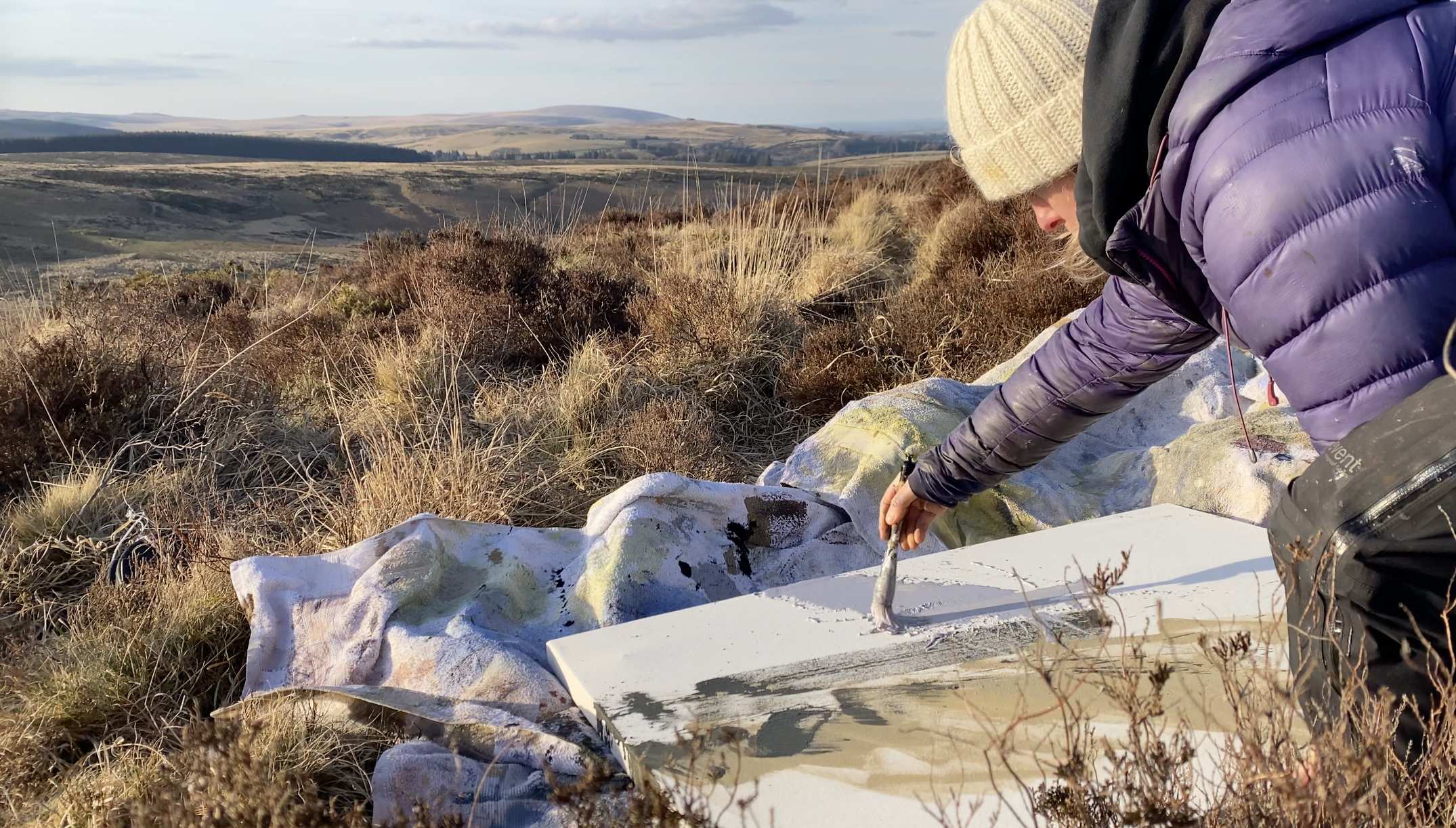
Welcome to part five of my six-part series on abstraction. This week we're taking everything we've explored in the studio — the loosened grip, the compositional instinct, the discovery mindset — and we're stepping outside. Because painting in the landscape is where it all comes together. And also where, for many artists, everything falls apart.
If you've ever wanted to draw or paint outdoors — or tried it and felt immediately, hopelessly swamped — this post is directly for you. The overwhelm is real. And it is completely understandable once you understand what's actually happening.
"I get overwhelmed by everything around me. I don't know what to leave out."— A Wild at Art member
"There's too much to choose from — too much beauty, too many details. I freeze."— Another Wild at Art member
Both of those responses describe the same experience. And it's an experience almost every outdoor artist goes through — not just beginners, but painters who have been working in the landscape for years. The outside world is relentless. It doesn't hold still for you. It doesn't edit itself into a manageable composition. It just keeps happening.
Why outside overwhelms us
In a studio, you control the environment. You can freeze a reference image. You can take as long as you need with a colour mix. You can stop, step back, think. Outside, the world refuses to cooperate with any of that. And that is actually the gift of it — if you can learn to work with the chaos rather than against it.
The mistake most artists make when they go out is trying to solve the overwhelm by capturing more. More careful observation. More detail. More accuracy. A determined effort to get it all in. But the landscape will always out-detail you. You cannot win that game. And the more you try, the more lifeless your studies become.
The answer is the opposite of what instinct suggests. You need to take less. Much, much less.
From copying to composing
Trying to cram in every detail will only complicate and deaden a landscape study. Your job outdoors isn't to copy what you see. It's to suggest what you felt.
Suggest, don't copy
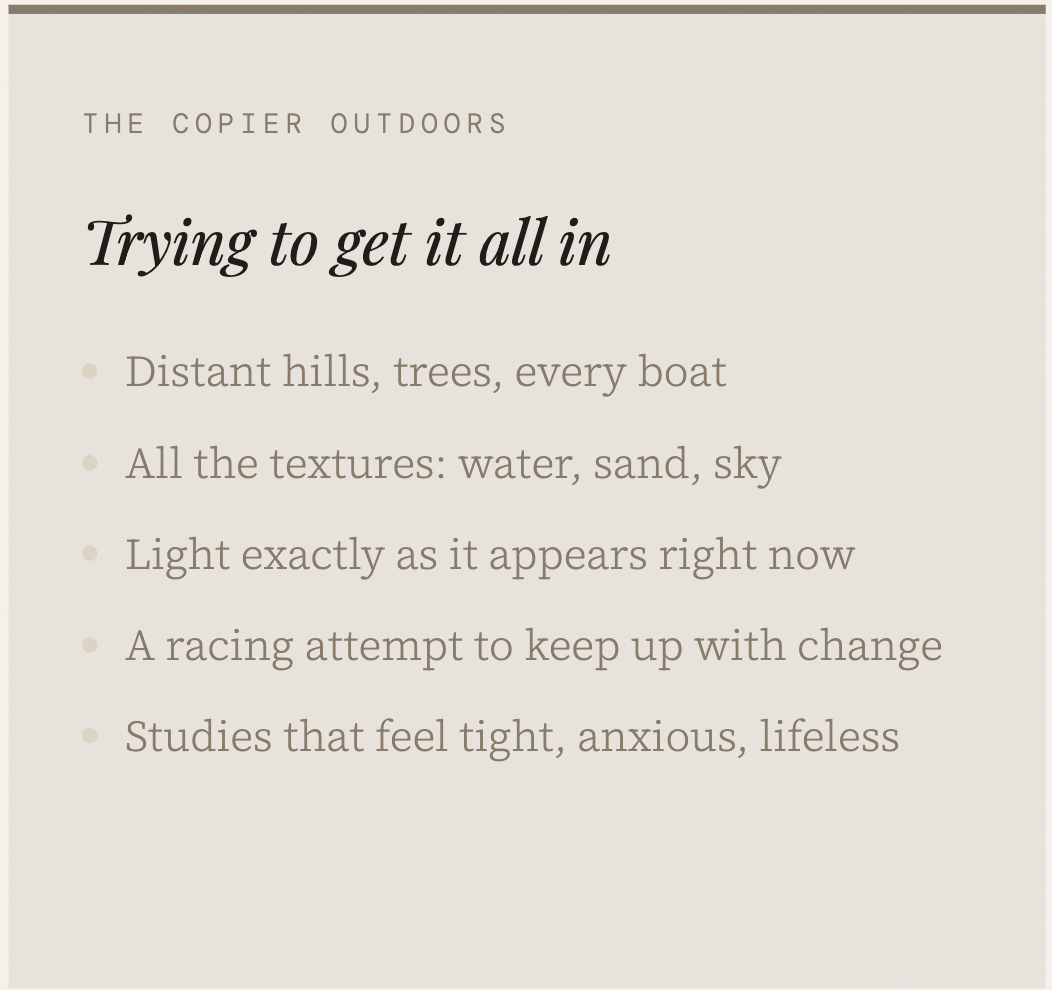
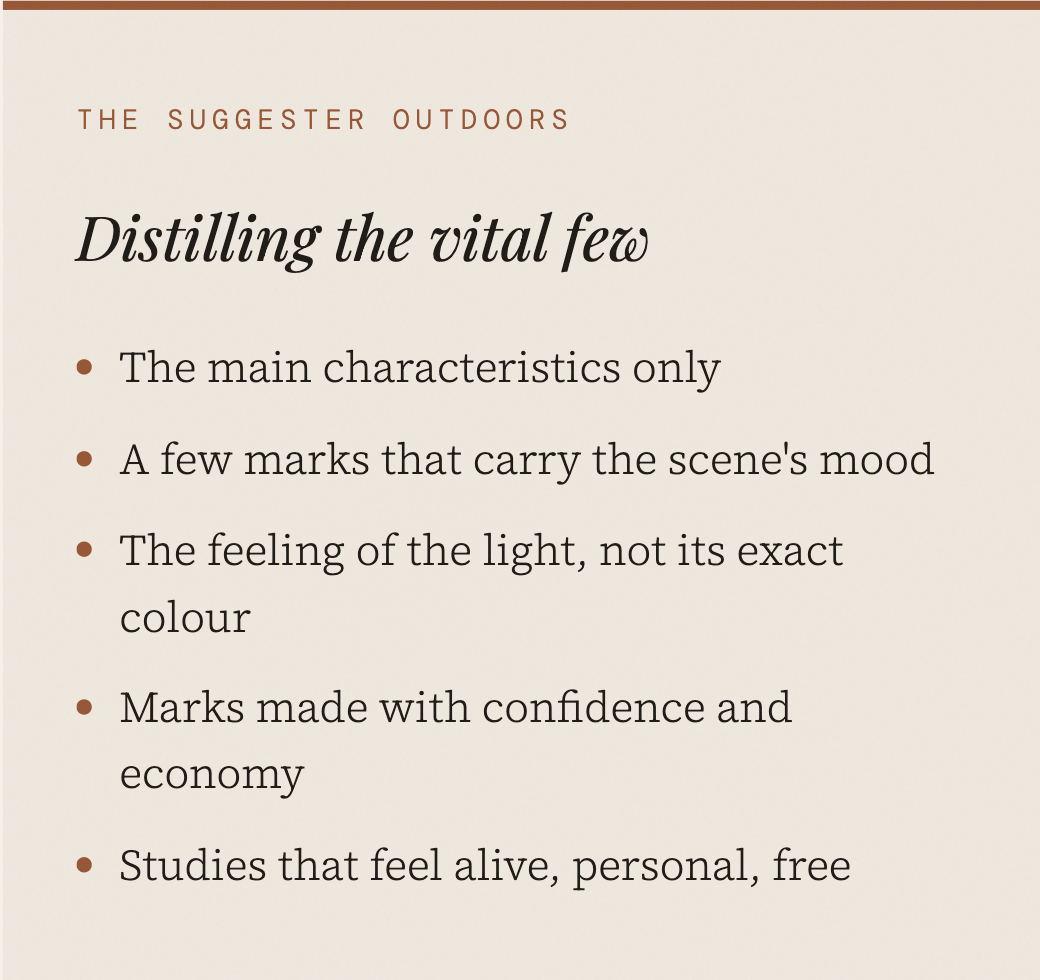
Before you even pick up a mark-making tool, try this: sit and look for a while. Just look. Don't draw. Don't plan. Don't problem-solve. Simply sit with the landscape and let it speak to you. What are the main distinctive elements of the view? If you had to describe this scene in three sentences to someone who couldn't see it — what would you say?
Those three sentences contain your painting. Everything else is noise.
A study in simplicity — the estuary
Let me show you exactly what I mean, using one of my own estuary studies as a worked example. Standing at the water's edge, there were distant hills, dozens of boats, trees, shore textures, sky, clouds, reflections, mud — an enormous amount of visual information. Here is what I actually painted:
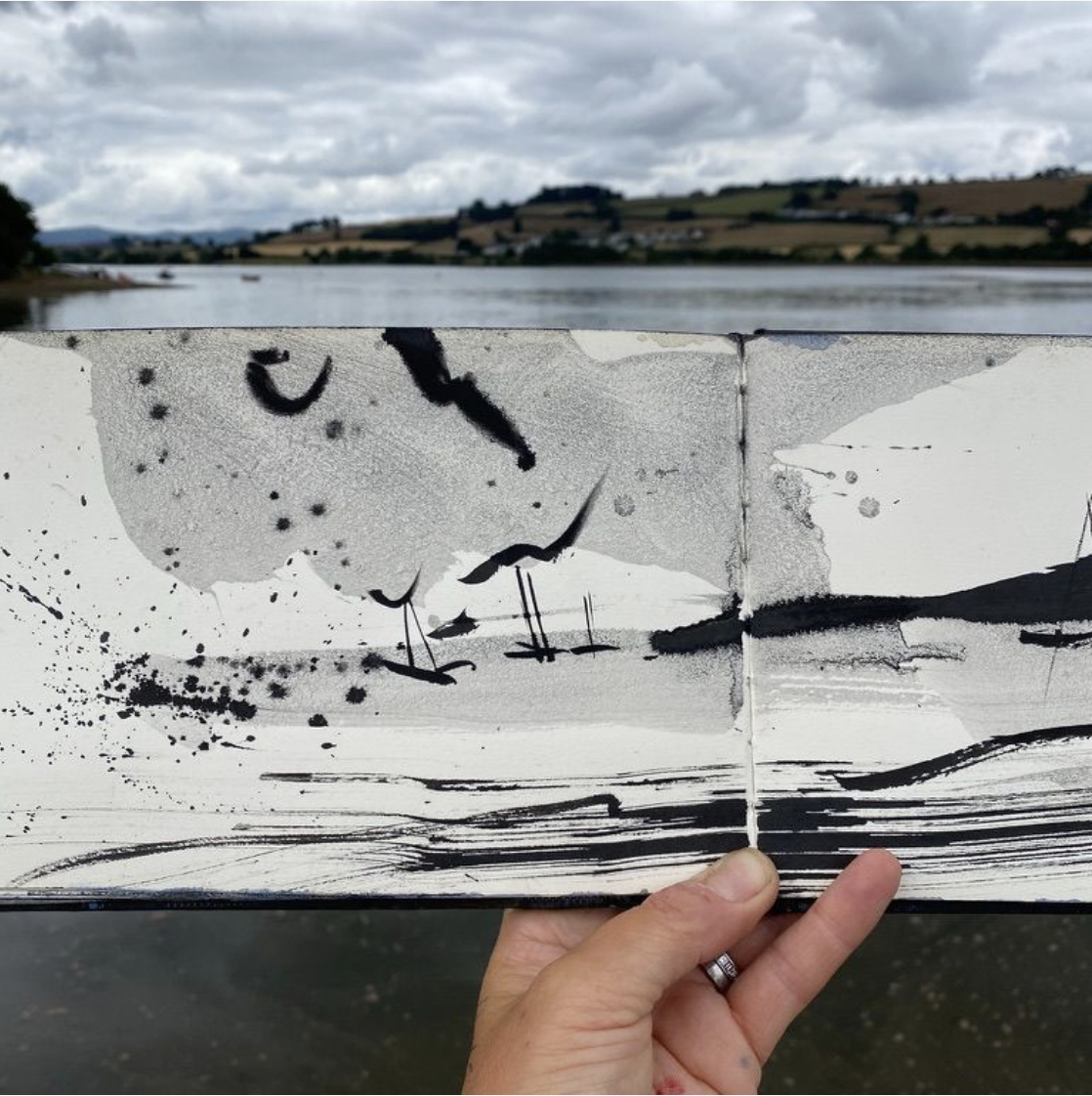
Estuary Study — How It Was Made
Everything the scene offered vs. everything I chose
The marks are minimal. The sense of place is complete.
The Sky = A single soft grey wash. Nothing more. Sky suggested, not painted.
The Boats = Tiny marks — just enough to add scale. Not all the boats. Just the idea of boats.
The Shore = A splatter of ink. Not drawn — thrown. The pebbles implied by a gesture.
The Water = Linear brush marks with a fan brush, dragged horizontally. Lines that feel like water without depicting it.
The Hills = Left out entirely. They weren't the vital thing. The water was.
The hills, all the individual boats, every texture of water and sand — none of it is there. And the scene reads completely. Scale, space, atmosphere, place. Everything essential. Nothing extra.
Sam's outdoor kit — the tools that make it possible
Part of what makes outdoor working feel manageable is having a simple, well-chosen kit you trust completely. Not too much — too many choices outdoors creates its own paralysis. What you want is a compact selection that gives you a wide range of marks without the decision fatigue.
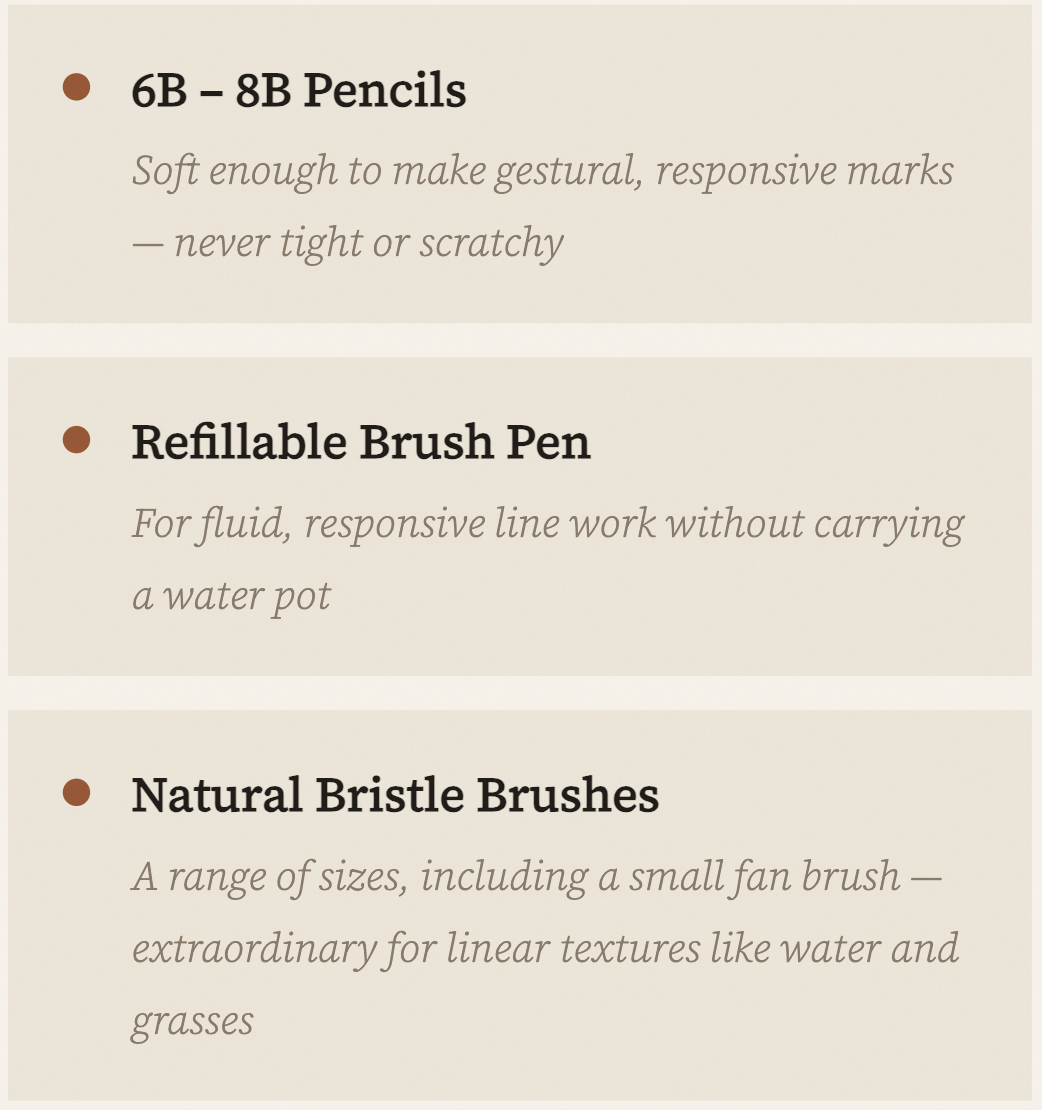
Here's exactly what I carry. Everything in this kit can draw and paint. Everything can make dry marks and wet marks that work together. And I know without thinking what each tool does — which means I can focus entirely on looking and responding rather than managing materials.
Sam's Field Kit List
The tools I carry outdoors for drawing & tonal studies
A wide range of marks from a small, trusted selection. Dry and wet. Fine and broad. All working together.
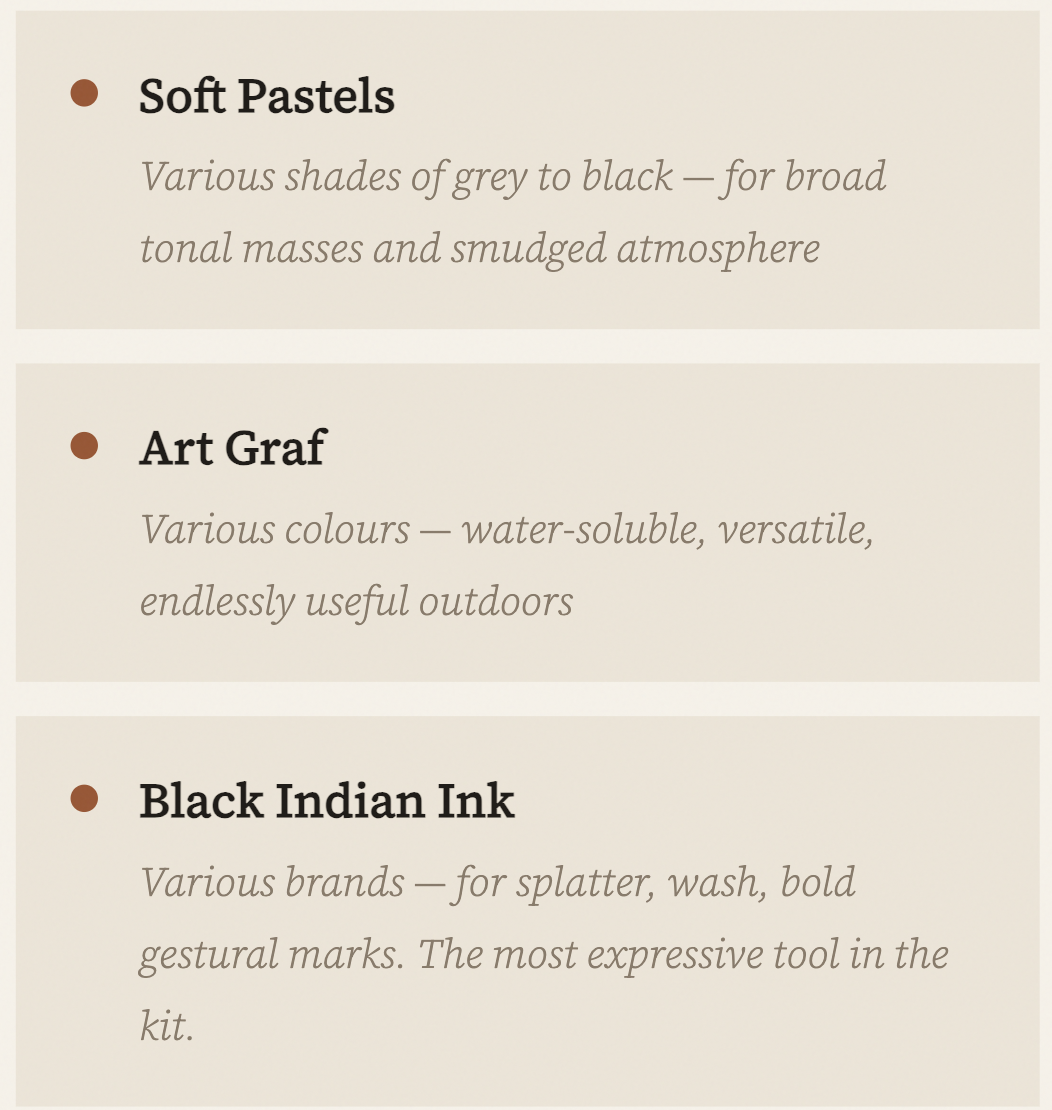
Spend time at home playing with these materials before you go out — exploring what marks each one makes. Know your tools intimately, so outdoors you can stop thinking about them entirely and simply respond to what's in front of you.
One more thing — a word about colour
Once you feel confident approaching the landscape this way — with economy, suggestion, and instinct — working in colour becomes so much easier too.
Starting in monochrome isn't a limitation. It's a foundation. Get the marks and tones right first. The colour will follow naturally.
Coming next — the final instalment
Part 6 — Bringing the Energy of Your Sketchbook into Studio Paintings
I hope this gives you real confidence to take your sketchbook outside this week — even just to a garden, a window, or a familiar local view. Sit for longer than feels comfortable before you draw. Then make fewer marks than you think you need. And see what happens.
The landscape will always be too big to copy. That's not the problem — that's the invitation.
Love Sam x